
Back to: Hiring Course
Phone Interview Instructions
Phone interviews are a great way to get to know a candidate without spending too much time. I also like that phone interviews remove a lot of bias from the interview process, because at this point you can’t physically see the candidate.
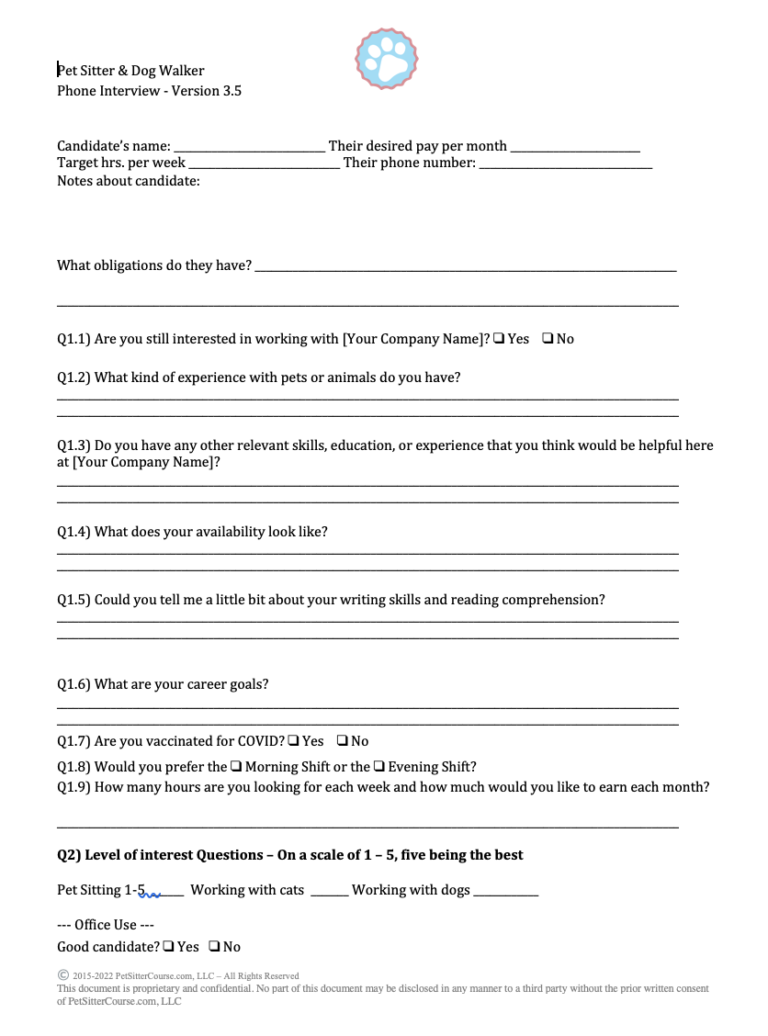
The full example phone interview is included with your enrollment. See the "Document Pack" lesson.
Prepare for the Interview
- Review the hiring scorecard (Included in your document pack), job ad, and job description (if necessary) to refresh your memory about the job
- Review the applicant’s resume, and fill out the top portion of the phone interview form (also included in your document pack)
- Make notes about the candidates on the phone interview form
- Target desired hours per week
- Target desired pay per month
- Any obligations the candidate declared on their application
- Make sure the candidate’s schedule will work with what you need!
- Determine if the candidate’s desired hours and pay per month is something you can commit to, and is a good fit for you
- Make notes about the candidates on the phone interview form
- Add any custom questions you have for the candidate
- If you are curious about anything specific in the client’s application, you may want to add a custom question to the end of the phone interview
- Make sure you only ask questions permissible by law
Only Hire the Best Candidates!
A bad hire can cost the company 1.5x the salary of the person you are hiring. That means a person making 30K/year would in fact cost the company 45K each year in lost revenue.
TAKE THIS SERIOUSLY—YOU ONLY WANT A-PLAYERS!!
Only bring in people who seem to be a strong fit. If not, screen them out.
You want to find people who:
- Have availability that matches the shift you are hiring for
- Can speak clearly and plainly
- Are friendly and excited about the job
- Have good problem-solving skills
- Can work through each of the questions without giving up or getting flustered
- Show good reading and writing skills
- Are interested in the job itself
A side note: It’s a good idea to hire more people than you think you need.
Start The Interview
To start the interview, say something like:
“I’m really looking forward to this interview. Here’s how I like to set these up.
We will spend the first 30 minutes or so going over a few initial questions about the job, then I have a few questions where you can rank your level of interest from 1-5. Then, we have a couple of multi-part questions to go over.
After that, I am happy to answer any questions you have about the job so you can get to know us, and get to know more about the position. Does that sound good?”
Candidates will pretty much always agree to this.
Again, your message throughout the interview should be “We want you!” Don’t play hard to get. You can always send a rejection letter later if you think the candidate will not work out. However, you don’t want to lose a good candidate because you were not putting YOUR best foot forward during the interviews. Be friendly, and try to keep the interview conversational. Remember, the candidate is likely to be at least a little nervous. They will reveal more about themselves when you keep the tone casual.
IMPORTANT!!! — DO NOT start talking about what you are looking for in a candidate during the first parts of the interview. The candidate will just parrot it right back to you. DO NOT taint the conversation with your expectations at this point.
Wait until you have your questions answered before you start answering (too many) questions about the job.

Questions 1.1 – 1.9
Job Related Questions
These are questions about the job in general. It’s helpful to start by asking if the candidate is still interested in the job. It’s a nice, easy question that gets the conversation started.
One of the most important questions to ask is the question about availability. You want to hire folks who are available to work the schedule you need them to work. You can look over an example pet sitting schedule here.
Look for candidates who want a monthly pay range and hours per week you can generally provide. Some people’s expectations are way too high. Be sure to screen them out. Other people are just looking for a few hours each week—these folks can be very helpful to fill in the gaps.
When I would conduct interviews, I liked to ask about a candidate’s reading and writing skills. This was mostly a question pertinent to cultural fit within our company. We tended to hire folks who were great writers. We even hired a few authors (who tend to make great pet sitters). However, strong reading and writing skills are also an important attribute of a pet sitter.
The actual job of pet sitting and dog walking is a lot of reading client’s instructions and writing visit updates. Also, a lot of training information tends to be written.
Question 2
Level of Interest Questions
The best candidates answer 5 across the board, or close to 5 across the board. Steer clear if someone is giving you threes or fours here. Read between the lines here. A three or a four likely means one or two.
Question 3 & 4
Strengths & Weaknesses
These are my favorite two questions. They will give you a good idea of a candidate’s professional strengths, interests, and weaknesses. Additionally, they are perfect questions for assessing a candidate’s problem-solving skills.
Most people have one or two strengths and weaknesses in mind when they come to an interview. However, they are not expecting to come up with a list of 8-12. The best candidates will be able to work through this question and will give you real answers.
If a candidate gets frustrated or gives up (even after some coaxing and suggestions for how to get through the question), you will want to screen them out.
Be sure to listen to the Phone Interview example recordings to hear how both good and bad candidates answer all of the questions discussed here.

Now It’s Time for the Candidate to Interview You
Many business owners get frustrated when they hire a candidate only to have them quit a few weeks later. Often these candidates will say, “I didn’t expect this job to have such a strange schedule,” or, “I didn’t realize this job was so much driving.”
To prevent this, be sure to give the candidate a chance to ask you any questions they have about the position. This is also a perfect time to set expectations about the job. During this part of the interview, it’s also common to realize a candidate is not a good fit based on how they react to your answers.
It’s important to understand that a candidate will want to please you, and will say yes to pretty much anything they think will land them the job. Do your best to read between the lines, and ask follow up questions if you think a candidate is just telling you what you want to hear.
End the Interview
If you think the candidate is an excellent fit for your company, it’s helpful to let them know they did a great job right at the end of the phone interview. Go on to tell them you would like to schedule an in-person interview with them soon.
When you show interest in the best candidates right away, you are more likely to successfully hire them. Don’t drag your feet during the interview process. The best candidates have options, and you don’t want to let them slip through your fingers by adding unnecessary delay.
If a candidate knows they will have an in-person interview soon, especially for a job they are very interested in, they are less likely to keep looking for other jobs. However, if you keep them waiting and wondering, these candidates may lose hope (or interest), and move on to another opportunity.
Common Questions Candidates Have for the Interviewer
You will want to write out answers for some of the most common questions candidates tend to ask at the end of the phone interview. Writing these answers out is especially helpful if you have an office manager helping with the phone interview process.
Common questions:
- What will my schedule look like?
- How is the pay calculated for drive time? Are visits paid at a flat rate or hourly?
- Are there any benefits with this job?
- What does a typical work day look like at your company?
- What is your least favorite part of the job?
- What is your most favorite part of the job?
- How does the onboarding and training process work?
- Is there any way to move up in the company?